Tulsi vs Vasaka: India's Two Most Powerful Lung Herbs — What Each One Does

Ask any Ayurvedic vaidya which herbs they reach for first in a respiratory case, and Tulsi (Ocimum sanctum) and Vasaka (Adhatoda vasica) will almost always be named. Both are ancient, both are proven — but they work through completely different mechanisms. Understanding that difference determines whether you use the right herb for the right problem.
Tulsi (Ocimum sanctum): The Daily Defender
In Ayurvedic pharmacology, Tulsi is classified as a Rasayana — a rejuvenating substance that builds systemic resilience over time. Its actions on the respiratory system are primarily preventive and adaptogenic rather than acutely therapeutic. This distinction matters enormously when you are choosing between the two herbs.
Tulsi's active constituents — eugenol, caryophyllene, rosmarinic acid, and ursolic acid — work together to accomplish three specific things in respiratory tissue. First, they neutralise free radicals and reduce oxidative stress, which is how pollution and allergens damage bronchial cell walls. Second, they modulate the immune response, reducing the tendency toward hypersensitive reactions in airways — making Tulsi particularly valuable for people with allergic or atopic respiratory conditions. Third, eugenol has demonstrated antiviral and antimicrobial properties, providing a first line of defence against the respiratory pathogens (rhinovirus, adenovirus, Streptococcus) that exploit weakened airways.
In classical Ayurvedic texts — the Charaka Samhita and Ashtanga Hridayam — Tulsi is described as beneficial for Kapha-Vata respiratory conditions: the pattern characterised by chronic congestion (Kapha) combined with the spasmodic, dry, or anxiety-linked component (Vata). This is precisely the pattern most common among urban Indians dealing with chronic pollution exposure and stress.
The practical implication: Tulsi is ideal as a daily preventive. Tulsi tea every morning, Tulsi in the form of a well-formulated supplement taken consistently, or fresh leaves chewed on an empty stomach — all of these build the respiratory resilience that determines how your lungs respond to the next insult, whether that insult is a viral infection or a particularly bad pollution day.
Vasaka (Adhatoda vasica): The Acute Clearer
Vasaka is a very different proposition. Where Tulsi supports and prevents, Vasaka actively clears and opens. Its primary therapeutic action is bronchodilation and mucolysis — making it the herb of choice when the problem has already arrived.
The scientific story behind Vasaka is unusually well-documented for an Ayurvedic herb. Its active alkaloids — principally vasicine and vasicinone — have been isolated and studied since the 1920s. Vasicine stimulates the bronchial secretory glands to produce thinner, more mobile mucus, making it easier for cilia to clear. Vasicinone has demonstrated bronchodilatory properties — it relaxes smooth muscle in the bronchi, widening the airways in much the same way as certain pharmaceutical bronchodilators, but via a different molecular pathway.
In classical Ayurvedic classification, Vasaka is described as predominantly Kapha-Pitta reducing. It is specifically indicated for Shwasa (breathing difficulty), Kasa (cough), and Rakta-Pitta (conditions involving inflammation of mucous membranes). The key symptom picture: productive cough with thick mucus, chest tightness, reduced breath capacity, and congestion that is worse in cold, damp weather. These are the classic signs of Kapha excess in Pranavaha srotas.
The practical implication: Vasaka is the herb you want when symptoms have set in — seasonal chest congestion, productive cough during winter or monsoon, or the kind of chest heaviness that follows a viral respiratory infection. It also plays a critical role in environmental exposure: its mucolytic action actively helps the body remove pollution particulates that have been trapped in bronchial mucus.

A properly formulated respiratory supplement uses both Tulsi and Vasaka — plus supporting herbs — in calibrated ratios. Single-herb products miss the synergy that classical Ayurveda was built around.
Head-to-Head: Where Each Herb Excels
| Criteria | Tulsi | Vasaka |
|---|---|---|
| Primary action | Adaptogen, immunomodulator, antiviral | Bronchodilator, expectorant, mucolytic |
| Best for | Daily prevention, chronic low-level exposure, stress-linked respiratory sensitivity | Active congestion, productive cough, post-viral clearance, seasonal Kapha flare |
| Dosha affinity | Kapha-Vata pacifying | Kapha-Pitta pacifying |
| Speed of action | Gradual — builds over 4–6 weeks | Faster — noticeable in 3–7 days |
| Classical indication | Shwasa, Kasa with Vata component; Rasayana use | Shwasa, Kasa with Kapha dominance; Raktapitta |
The Supporting Cast: Pippali and Mulethi
In Ayurvedic formulation science, the most effective respiratory preparations are not built on single herbs — they are synergistic combinations in which each herb enhances the action of the others. Tulsi and Vasaka are the two lead actors, but Pippali and Mulethi are essential supporting herbs that determine whether the formulation actually reaches the target tissue.
- Tulsi (Ocimum sanctum) — Adaptogen and immunomodulator. Builds oxidative defence in bronchial tissue over time. Best for daily prevention and chronic exposure. Particularly effective for Kapha-Vata patterns — persistent congestion plus stress-linked sensitivity.
- Vasaka (Adhatoda vasica) — Bronchodilator and mucolytic via the alkaloids vasicine and vasicinone. Actively clears thick mucus, relaxes bronchial smooth muscle, and reduces Kapha obstruction. The acute intervention herb — for congestion already present.
- Pippali (Piper longum) — Called the "carrier" herb — its piperine content increases bioavailability of the other herbs into respiratory tissue specifically. Also a mild bronchodilator and Kapha-reducing agent. In Pippali Rasayana (long pepper in honey), prescribed in classical texts for lung tissue regeneration.
- Mulethi (Glycyrrhiza glabra) — The soother. Where Vasaka stirs up mucus and Pippali heats the system, Mulethi's glycyrrhizin calms the resulting inflammation. A demulcent that coats irritated airways, reducing the cough reflex while the other herbs do their clearing work.
Why Single-Herb Products Under-Deliver
The Ayurvedic concept of Anupana (carrier substance) and Yogavahi (synergy amplification) is not mystical — it has a rational pharmacological explanation. Piperine from Pippali, for instance, inhibits certain cytochrome P450 enzymes that would otherwise rapidly metabolise vasicine. The result is that Vasaka in a Pippali-containing formulation maintains higher serum concentrations for longer than Vasaka taken alone.
Similarly, Mulethi's glycyrrhizin reduces prostaglandin synthesis — dampening the inflammatory cascade that Vasaka's mucolytic action can temporarily amplify in very congested airways. Without Mulethi, patients sometimes experience increased cough reflex immediately after taking Vasaka as the newly mobilised mucus triggers the cough centre. With Mulethi, this transition is smoother.
Tulsi's rosmarinic acid has additive antioxidant effects with Mulethi's flavonoids at the level of bronchial cell membranes. The combination produces a greater reduction in oxidative damage markers than either herb produces alone. This is Ayurvedic formulation science — and it is why classical practitioners consistently rejected single-herb treatment for respiratory conditions in favour of compound preparations.
Recommended for Lung Health
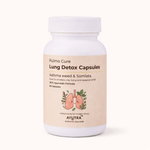
PulmoCure — Ayurvedic Lung Detox
Five clinically-studied Ayurvedic herbs — Vasaka, Mulethi, Tulsi, Pippali, Kantakari — in therapeutic ratios. AYUSH approved, GMP certified. For daily lung support and respiratory resilience.
✓ AYUSH Approved✓ FSSAI Registered✓ GMP Certified✓ 100% Vegetarian✓ 60 Capsules
Buy PulmoCure — ₹749 →Frequently Asked Questions
Can I just drink Tulsi tea and get the same benefits?
Tulsi tea provides real benefits — the hot water extraction pulls out water-soluble phenols and volatile oils including eugenol. But tea-grade Tulsi has two limitations: standardisation and dosage. You cannot control the potency of loose Tulsi tea the way a GMP-certified supplement controls the concentration of actives per dose. Additionally, tea misses the synergistic herbs — Vasaka, Pippali, Mulethi — that a formulated supplement includes. For light daily maintenance, Tulsi tea is a good habit. For meaningful respiratory support, a standardised supplement delivers more consistent, measurable benefit.
Is Vasaka safe for pregnant women?
Vasaka is generally not recommended during pregnancy. Its alkaloids, particularly vasicine, have demonstrated uterotonic properties in some animal studies — meaning they may stimulate uterine contractions. Classical Ayurvedic texts also caution against Vasaka in pregnancy. Pregnant women seeking respiratory support should consult their gynaecologist and an Ayurvedic practitioner before taking any Vasaka-containing supplement. Tulsi tea in moderate amounts is generally considered safe in pregnancy, but again, medical clearance is advisable.
Which dosha type benefits most from Tulsi vs Vasaka?
Tulsi's primary value is for Kapha-Vata respiratory patterns — chronic congestion mixed with spasmodic, stress-linked, or dry-irritant components. If your respiratory issues worsen with anxiety, dry weather, or seasonal transitions, Tulsi is highly relevant for you. Vasaka is most targeted at Kapha and Kapha-Pitta patterns — thick productive mucus, chest heaviness, congestion that is worse in cold and damp. Pitta types with yellow or green mucus, burning sensation, or fever-associated respiratory issues benefit most from Vasaka's anti-inflammatory mucolytic action. Both dosha types benefit from a formulation that contains all five herbs.
Can I use these herbs with my inhaler medication?
Generally, Ayurvedic respiratory herbs and inhaler medications (bronchodilators or corticosteroids) work through different mechanisms and do not have known direct interactions. However, if you are using a prescription inhaler for diagnosed asthma or COPD, you must not reduce or discontinue it without medical supervision. Ayurvedic herbs can serve as a complementary layer of support — reducing the frequency of acute episodes, clearing background congestion, and supporting baseline lung resilience — while your prescribed medication handles acute symptom control. Always inform your doctor about any supplements you are taking.
How do I know if a supplement has enough Vasaka to be effective?
Look for products that declare the extract standardisation on the label — e.g., "Vasaka extract standardised to X% vasicine alkaloids." A product that lists only "Vasaka leaf powder" without standardisation may have highly variable alkaloid content from batch to batch. GMP-certified manufacturers test incoming raw material and finished product for potency. Additionally, check whether the product is AYUSH-approved — this requires submission of formulation dossiers and safety data to the government, providing a baseline quality assurance that unlicensed products lack.
-
Posted in
ayurveda, herbs, india, long-form, lung-health, pulmocure, respiratory, tulsi, vasaka