Post-COVID Lung Recovery: The Ayurvedic Protocol for Rebuilding Respiratory Strength

Millions of Indians recovered from COVID-19 only to find that "recovery" was not a clean line. Persistent fatigue, shortness of breath on mild exertion, a morning cough that lingers months later — these are signs that the respiratory system has not fully healed. Ayurveda offers a structured, sequential protocol for exactly this situation.
What Long COVID Looks Like in Ayurvedic Terms
Modern medicine describes "long COVID" as a constellation of symptoms — fatigue, dyspnoea (breathlessness), brain fog, cough — persisting beyond 12 weeks after initial infection. Ayurveda, working with a different vocabulary but a compatible understanding, would characterise post-COVID respiratory residue through three concepts.
First: Ama in Pranavaha srotas. The viral infection and the inflammatory response it triggered left behind metabolic residue — Ama — in the respiratory channels. This is not purely metaphorical: pathologically, post-COVID lung tissue shows areas of fibrotic scarring, micro-thrombosis, and persistent inflammatory cell infiltration. Ama in Ayurvedic terms maps closely to these cellular debris loads that the body's cleanup mechanisms have not yet cleared.
Second: Depleted Ojas. Ojas is the refined essence of all seven dhatus (tissues) — the substrate of immunity, vitality, and the body's regenerative capacity. A severe viral infection burns through Ojas at an extraordinary rate. Post-COVID fatigue — the kind that is disproportionate to activity, that does not improve with rest — is a classic presentation of Ojas depletion. The lungs and heart (Hridaya) are the primary seats of Ojas, which explains why COVID preferentially depletes respiratory and cardiac resilience.
Third: Weak Agni in lung tissue. The Ayurvedic concept of tissue-level Agni (Dhatvagni) refers to the metabolic capacity of each tissue to regenerate itself. When Dhatvagni in the lungs is impaired — as it is after significant COVID illness — normal cellular repair is slowed. The body produces new tissue slowly and less cleanly, accumulating the functional residue that manifests as reduced capacity and persistent symptoms.
The Three-Phase Ayurvedic Recovery Protocol
Effective Ayurvedic management of post-COVID lung recovery is sequential — each phase builds the conditions for the next. Jumping directly to strengthening herbs without first clearing residual inflammation is counterproductive; the herbs cannot penetrate obstructed channels.
Phase 1 — Weeks 1 to 4
Clear Residual Inflammation
Focus: Ama clearance, reducing residual Kapha obstruction, calming Pitta-driven lingering inflammation. Key herbs: Vasaka (mucolytic, clears bronchial Ama), Mulethi (anti-inflammatory, soothes irritated mucosa), Tulsi (antiviral and antioxidant — reduces ongoing oxidative burden in healing tissue). Dietary: warm, light, easy-to-digest foods only. No cold dairy, no fried food, no late dinners. The goal is to reduce the total inflammatory and digestive load so the body can redirect resources to pulmonary clearance.
Phase 2 — Weeks 4 to 10
Rebuild Tissue Strength
Focus: Strengthening Dhatvagni in lung tissue, beginning Ojas restoration. Key herbs: Pippali Rasayana (long pepper in raw honey, the classical preparation for Pranavaha rejuvenation), Ashwagandha (Withania somnifera — Rasayana that rebuilds stamina and reduces cortisol-driven inflammation), Shatavari (Asparagus racemosus — rebuilds the fluid and mucosal layers depleted by viral illness). This is also when gentle stamina-building exercise begins — not gym workouts, but 20-minute slow walks, swimming, or light cycling.
Phase 3 — Weeks 10 to 20
Restore Ojas
Focus: Full replenishment of the body's vital reserves. Key support: Amalaki (Emblica officinalis — the richest natural source of Vitamin C, also a Rasayana), warm milk with ghee and a pinch of turmeric taken at bedtime (nourishes and builds Ojas directly), slow pranayama expanding in duration. Diet becomes richer — now including nourishing soups, mung dal, gentle dairy, and seasonal fruits. This phase is about long-term strengthening, not symptom management.

Pranayama — specifically Anulom Vilom and Bhramari — is the most potent non-pharmacological intervention for post-COVID respiratory recovery. It should begin gently in Phase 1 and build through Phase 3.
The Pranayama Sequence for Post-COVID Recovery
Pranayama is not optional in this protocol — it is arguably the most important single intervention. It directly exercises and rehabilitates the Pranavaha srotas in ways that no herb alone can replicate.
- Anulom Vilom (Alternate Nostril Breathing): Begin with 5 minutes daily in Week 1, increasing by 2 minutes per week until reaching 15–20 minutes. This technique balances Vata, tones the nervous system, and gently stimulates mucociliary clearance rhythm. It is the foundation of the whole sequence.
- Bhramari (Humming Bee Breath): 5 rounds after Anulom Vilom. The vibrational component of Bhramari increases nitric oxide production in the sinuses — nitric oxide has known antiviral and bronchodilatory properties, and also helps clear post-COVID residual inflammation in upper airways.
- Shavasana breathing: 5 minutes of conscious diaphragmatic breathing lying flat. This is not a relaxation practice in the trivial sense — diaphragmatic retraining after COVID is clinically significant. The virus and the inflammatory response it causes often leave patients breathing shallowly from the chest wall, allowing the lower lobes of the lungs to progressively deconsolidate. Diaphragmatic breathing directly counters this.
- What to avoid early in recovery: Kapalbhati (forceful exhale) and Bhastrika (bellows breathing) should be delayed until Week 8 at the earliest, and only if breathlessness is completely resolved. Forcing these practices before the lungs are ready can trigger inflammation relapse.
The Four Lung Recovery Herbs
- Vasaka (Adhatoda vasica) — Phase 1 clearance herb. Its mucolytic action mobilises the residual mucus and cellular debris left behind in post-COVID airways. Vasicine alkaloids thin secretions, allowing the recovering mucociliary apparatus to begin clearing the channels. Critical in the first 4 weeks.
- Mulethi (Glycyrrhiza glabra) — Anti-inflammatory and demulcent. Glycyrrhizin suppresses prostaglandin and leukotriene pathways — the same inflammatory mediators that COVID triggers in lung tissue. Also soothes the persistent dry throat and mild cough that characterises post-COVID recovery.
- Tulsi (Ocimum sanctum) — Bridges Phases 1 and 2. As an immunomodulator, it helps recalibrate the immune system after the dysregulated response that COVID triggers. Continued use through Phase 2 supports the transition to Ojas-building by reducing the background inflammatory load that depletes it.
- Pippali (Piper longum) — The Rasayana herb for Pranavaha srotas. In Phase 2, Pippali's role shifts from carrier herb to tissue rejuvenator. Piperine promotes new bronchial tissue synthesis and improves oxygen uptake in healing alveoli. Classical texts specifically list Pippali for rebuilding lung capacity after respiratory illness.
Dietary Guidance and Pacing for Recovery
The single most common mistake in post-COVID recovery is returning to full activity too quickly. The Charaka Samhita describes the concept of Bala — vital strength — that must be rebuilt in sequence before physical demands increase. Ignoring Bala and pushing exercise prematurely is called Ativyayama (overexertion) and is listed as a direct cause of Pranavaha sroto-dushti (respiratory channel damage).
Practically, this means: if a 20-minute walk leaves you tired, you are not ready for a 45-minute run. The Ayurvedic rule is to exercise to 50% of maximum capacity during recovery — you should be able to carry on a conversation during the entire duration. Exceeding this before Ojas is rebuilt depletes it further, pushing recovery backward.
Dietary guidance for all three phases includes: no cold drinks or cold food (room temperature water is the minimum), no processed snack foods or refined flour, no late-night eating (last meal by 7:30pm), and emphasis on Tridoshic staples — mung dal khichdi, warm vegetable soups, steamed vegetables, and seasonal fruits at room temperature.
Signs You Are Recovering Well — and When to Seek Help
Positive signs: Morning breathlessness gradually resolving, ability to walk 20–30 minutes without fatigue by Week 8, reduced frequency of coughing episodes, improved sleep quality, and return of appetite. These indicate Ama clearance and early Ojas rebuilding are working.
Seek immediate medical attention if: breathlessness worsens rather than improves, you develop chest pain or palpitations, SpO2 readings drop below 94%, or you develop new fever after initial recovery. Ayurvedic support is a powerful complement to post-COVID care — it is not a substitute for medical monitoring when warning signs appear.
Recommended for Lung Health
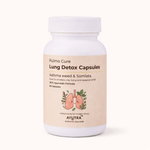
PulmoCure — Ayurvedic Lung Detox
Five clinically-studied Ayurvedic herbs — Vasaka, Mulethi, Tulsi, Pippali, Kantakari — in therapeutic ratios. AYUSH approved, GMP certified. For daily lung support and respiratory resilience.
✓ AYUSH Approved✓ FSSAI Registered✓ GMP Certified✓ 100% Vegetarian✓ 60 Capsules
Buy PulmoCure — ₹749 →Frequently Asked Questions
How long does post-COVID lung recovery take with Ayurvedic support?
The full three-phase protocol spans 16–20 weeks, but meaningful improvement in daily symptoms — reduced morning breathlessness, less fatigue on normal activity — is typically reported within 4–6 weeks of consistent Phase 1 support. Mild COVID cases with minor respiratory involvement may complete their recovery arc in 8–10 weeks. Severe cases that required hospitalisation or oxygen support should expect a longer Phase 2 and 3, and should maintain physician oversight throughout. Ayurvedic recovery follows tissue-regeneration timings, which cannot be safely accelerated.
Can I take Ayurvedic lung herbs with my doctor-prescribed medications?
Generally, yes — Ayurvedic respiratory herbs and standard post-COVID medications (anticoagulants, corticosteroids, antivirals) work through different pathways without known major interactions. However, Mulethi (Glycyrrhiza glabra) can increase blood pressure with prolonged use at high doses and may reduce potassium — relevant if you are on diuretics or antihypertensives. Always inform your treating doctor about any supplements you take. If you are on blood thinners (rivaroxaban, warfarin), have your levels monitored when starting new supplements.
Is it safe to do pranayama while still experiencing breathlessness?
Yes, with important qualification. Gentle, slow pranayama — specifically Anulom Vilom and Bhramari — is safe and actively beneficial even with mild residual breathlessness, provided you listen to your body and stop if discomfort increases. What is not safe during active breathlessness is forceful pranayama (Kapalbhati, Bhastrika). The rule is: if the practice requires effort that increases breathlessness, stop and return when you're further along in recovery. Always practice in a seated, supported position early in recovery — not lying down, which can increase the sense of breathlessness.
What's the difference between post-COVID fatigue and post-COVID lung weakness?
Post-COVID fatigue (Ojas depletion) is a whole-body phenomenon — you feel exhausted even after sleep, brain function is slow, motivation is low, the body feels heavy. It is not specifically triggered by physical activity. Post-COVID lung weakness is more specific: normal resting state feels reasonably okay, but any exertion — walking upstairs, carrying groceries, speaking in long sentences — triggers disproportionate breathlessness or chest tightness. Many people experience both simultaneously. Ayurvedic treatment addresses both, but the prioritisation differs: Ama clearance is primary for lung weakness, while Ojas rebuilding is primary for fatigue. They overlap substantially in Phase 2 and 3.
Should I take PulmoCure during active COVID or only after?
PulmoCure's formulation is designed for Pranavaha support — mucolytic, bronchodilatory, anti-inflammatory — which is relevant both during active infection (to support clearance) and after (to clear residual Ama and rebuild tissue). Classical Ayurvedic practice supports use of Vasaka, Mulethi, and Tulsi during active respiratory infection. However, active COVID should be managed with medical oversight, especially if symptoms are severe or SpO2 is below 95%. PulmoCure is a complementary support — not a treatment for the active infection. For the post-COVID application specifically described in this article, begin the supplement once fever has fully resolved and you are in the initial recovery phase.
-
Posted in
ayurveda, covid, india, long-form, lung-health, pulmocure, recovery, respiratory